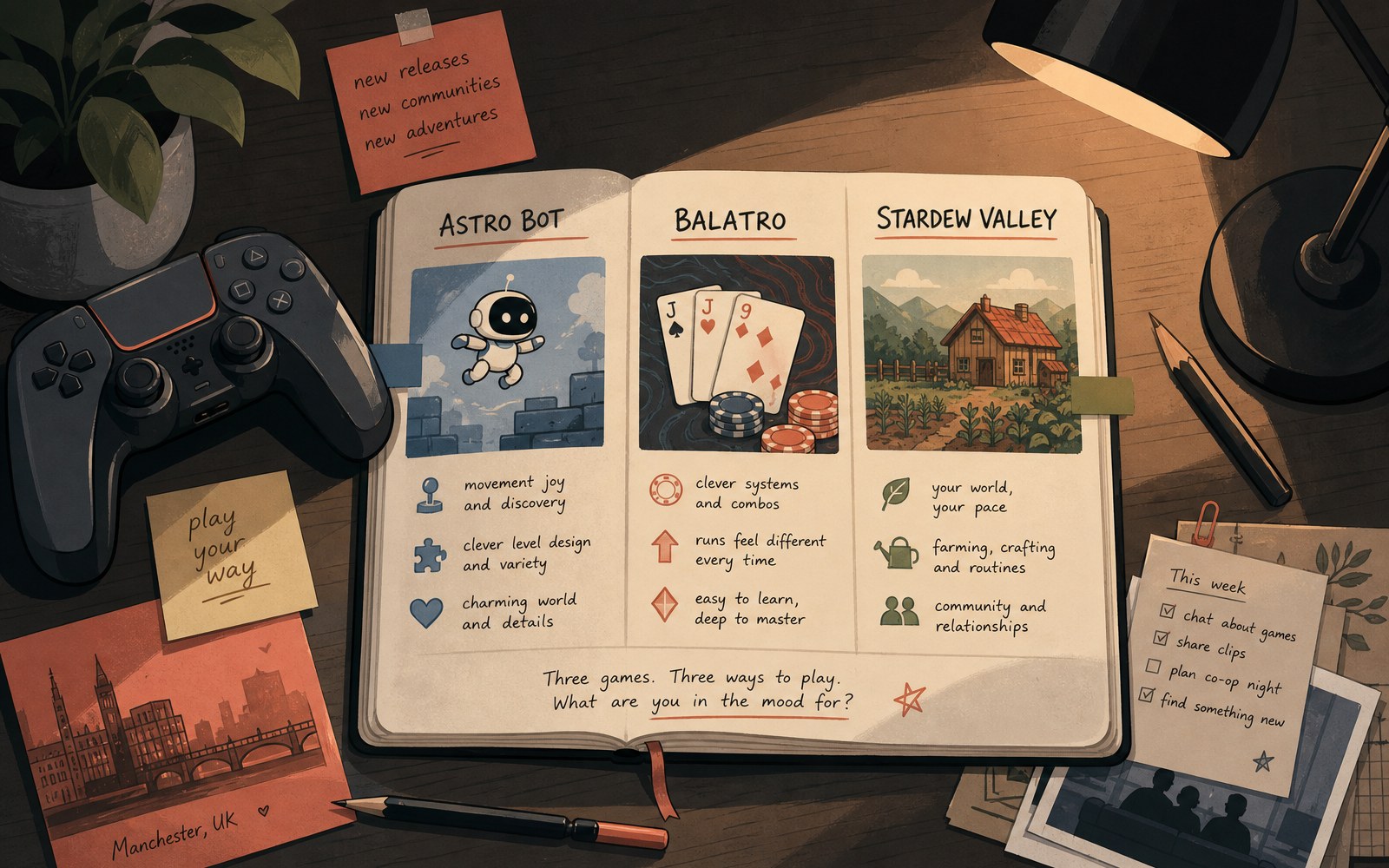
What helps a game stay in a community’s long memory? It might be a striking moment, a system that invites comparison or a routine people can describe to one another. Stardew Valley makes room for all three, while its seasonal structure gives them a lasting shape.
Created by ConcernedApe, Stardew Valley combines farming, exploration, relationships and seasonal routines. Crucially, it leaves more than one way to take part. A player can tend a farm, follow an exploratory path, spend time with relationships or move between these activities as the in-game calendar changes.
When a calendar becomes common ground
Seasons turn progress into a sequence that can be remembered and explained. A conversation about the game might start with what happened in a particular season, which routine was taking shape or which activity came first. The calendar is more than a backdrop: it gives community discussion a shared frame.
This does not mean that players experience the same path. The range of activities in Stardew Valley leaves room for different emphases and different tempos. One person may describe farming decisions; another may focus on exploration or relationships. These accounts can sit beside one another without requiring a single definition of correct participation.
Knowledge worth passing on
Long-running communities often grow through small pieces of practical knowledge. In Stardew Valley, seasonal routines give that exchange a natural structure. Advice can centre on timing, preparation and the choices that make one part of the calendar feel different from the next.
The value of this knowledge is not only efficiency. It also gives players a vocabulary for describing what they notice. Terms such as routine, season and relationship can carry both a practical meaning and a memory of how someone approached the game. Shared language makes individual play easier to compare without making it identical.
Different ways into the conversation
Stardew Valley’s community context is especially interesting because participation can be active, reflective or simply conversational. Someone might return to a familiar routine, compare approaches with another player or use the game as a reference point when discussing life-simulation design. The release supports these different forms of attention through the breadth of its activities.
That breadth also changes how recommendation works. Instead of asking whether a game suits one universal type of player, a more useful question is which part of its structure feels inviting. Farming, exploration, relationships and seasonal routines offer distinct starting points. Describing those routes gives readers clearer context than a broad judgement.
Why returning matters
Repeated routines can make a release feel less like a finished object and more like a place with remembered paths. In Stardew Valley, the seasonal cycle supplies a return point: the player can recognise a pattern while still finding room to adjust it. Our interpretation is that this balance helps explain why the game can sustain a community vocabulary over time.
The long life of shared play is not built from one universal experience. It grows from the ability to bring different observations into the same conversation. Stardew Valley makes that possible by connecting everyday actions with a visible calendar and by allowing farming, exploration and relationships to matter in different proportions.
Editorial note: Pixel Play Journal separates established game details from interpretation. This article uses Stardew Valley as a case study in how seasonal routines and varied participation can support shared knowledge and memory around a release.